
Cardiocrinum giganteum (Wall.) Makino, Bot. Mag. (Tokyo) 27: 125 (1913).
Lilium giganteum Wall., Tent. Fl. Napal.: 21 (1826).
घिउपात Ghiupaat (Nepali); Giant lily (English)
Taxon Description
Perennial herbs, 0.9–1.5(–3) m tall. Bulbs scaly upto 10 cm diameter; scales few, broadly ovate. Stems erect, green or dark green, usually with purple streaks on some parts, fistular, 3.8–8 cm in diameter at base, and upto 5 cm in diameter above. Basal leaves large, arranged in rosette, blade ovate, larger, deeply cordate at base, apex acuminate; cauline leaves smaller, blade 30–45 × 20–25 cm, base less deeply cordate, apex more acuminate, margin entire, veins reticulate, dichotomously branched; petiole 20–30 cm. Inflorescences 10–16-flowered terminal racemes; bracts usually deciduous, 18.5 × 2.5 cm. Flowers tubular, drooping or horizontal; pedicels 0.7–1 cm. Tepals white or pinkish with purple or reddish veins, narrowly oblanceolate, unequal, inner slightly broader than outer, 12–14 × 2–3.5 cm, apex rounded or obtuse. Filaments 4.5–9 cm, wide at base; anthers dorsifixed, 4–8 cm. Ovary cylindric, 2.2–3.4 cm, style 3–5 cm; stigma 3-lobed, short, rounded. Capsules oblong, 5–5.5 × 2–3.5 cm. Seeds reniform, upto 1 cm long, surrounded by membranous wing.
Distribution: Nepal, W Himalaya, E Himalaya, Tibetan Plateau, Assam–Burma, and E Asia.
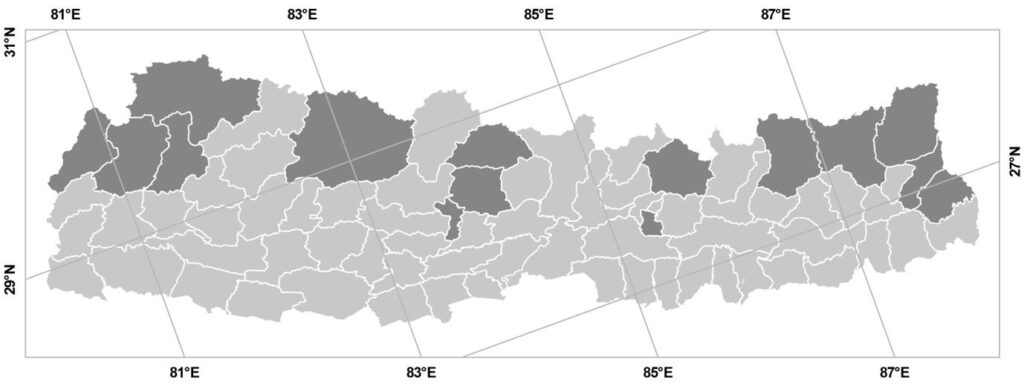
Altitudinal range: 1200–3700 m.
Ecology: Wet and shady places under dense canopy in coniferous, broad-leaved, or mixed forests; shady hillsides; sometimes found on open or exposed slopes.
Flowering: May–July. Fruiting: July–October.
Roots and leaves of the species has medicinal uses. Stem is used to make flute.