5. Cyanotis D.Don, Prodr. Fl. Nepal: 45 (1825).
Amischophacelus Rao & Kammathy; Zygomenes Salisb.
Taxon Description
Annual or perennial herbs. Roots fibrous. Rhizomes usually absent, sometimes decumbent below. Stems erect or creeping, decurrent from fused margin of sheaths. Leaves alternate, spiral, sessile, linear to lanceolate, elongated, succulent, smooth or slightly pubescent, sometimes glaucous, sheaths vaginate, open, margin entire or wavy. Inflorescence terminal or axillary, cyme, bracteoles persistent, involucral bracts typically broad and foliar, ovate to lanceolate, not penetrating the leaf sheath and emerges through the mouth of sheath, silky arachnoid pubescence present or absent, 2 to many flowered. Flowers bisexual, actinomorphic. Pedicels absent. Sepals 3, free, elliptic to ovate, concave. Petals 3, connate, tubular, linear-lanceolate, blue to violet or mauve. Stamens 6, fertile, long, slender, equal, slightly tapering towards apex, filaments sub apical swelling, anther locules, rounded to oblong, small and bilobed attached at the tip of filaments, longitudinally dehiscent. Ovary 3 loculed, ovules 2 per locule. Capsule 3-valved, obovoid to oblong. Seeds 1 or 2 per valve, cylindric, trigonous, rugose, reticulate, hilum linear.
Taxon Statistics
Worldwide 49 species in tropical and subtropical regions. Four species in Nepal.
Key to Species
1a Flowers in axillary , 3–6-flowered clusters …………………………………………………………………………………………………....……….…… 1. C. axillaris
b Flowers solitary or in terminal, 3–6-flowered clusters …………………………………………………………………………....……………..……………..………. 2
2a Leaves oblong-lanceolate, margin densely ciliate ..……………………………………………………………………………………………………… 2. C. cristata
b Leaves linear-lanceolate, glabrous or shortly cilate ………………………………………………………………………………..…………………..…………………. 3
3a Inflorescence with silky arachnoid pubescence. Seeds rugose ………………………………………………………………………..…..…. 3. C. fasiculata
b Inflorescence glabrous. Seeds reticulate ..……………………………………………………………………………………………..………………………… 4. C. vaga
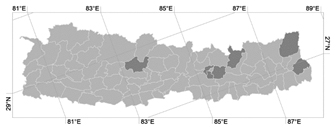
1. Cyanotis axillaris (L.) D.Don ex Sweet, Hort. Brit.ed.1 2: 430 (1826).
Commelina axillaris L., Sp. Pl. 1: 42 (1753); Amischophacelus axillaris (L.) Rao & Kammathy; Tradescantia axillaris (L.) L.; Zygomenes axillaris (L.) Salisb.
Annual herbs, 9–16 cm. Rhizomes absent. Stems erect or creeping, branched. Leaves spiral, cauline, linear, lanceolate, 2–4 X 0.4–0.6 cm, glabrous, apex acuminate, sheath tubular, ciliate. Inflorescence axillary cyme, cincinni axillary, involucral bracts large, ovate and hairy. Pedicels absent. Flowers 3–6, axillary clusters, bisexual, bracteoles present. Sepals 3, 6–9 mm, free, linear-spathulate. Petals 3, blue, 8–12 mm, long-clawed. Stamens 6, fertile, filaments long, sub apical swelling, lanate, blue. Ovary 3 loculed, ovules 1 per locule. Capsules 3-valved, oblong, compressed. Seed 1 per valve, small, 1.6–2.2 mm, pits shallow, grey.
Distribution: Nepal, E. Himalaya, Assam-Burma, E Asia, SE Asia and Australasia.
Altitudinal range: 1200–2100 m.
Ecology: On wet places.
Flowering: September – October.
Fruiting: October –November. 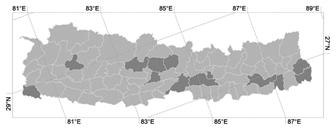
2. Cyanotis cristata (L.) D.Don, Prodr. Fl. Nepal: 46 (1825).
Commelina cristata L., Sp. Pl. 1: 42 (1753); Tradescantia cristata (L.) L.; Zygomenes cristata W.Wight.
Annual herbs, 25–35 cm. Rhizomes absent. Stems creeping, often branched. Leaves spiral, oblong-lanceolate to lanceolate-elliptic, glabrous, 1–9 X 1–2 cm, cauline, margin ciliate. Inflorescence terminal or axillary cyme, bracts ovate to lanceolate, 1–1.5 cm, foliaceous, bracteoles falcate, cincinni solitary or terminal, involucral bracts not penetrating the leaf sheath and emerges through the mouth of sheath. Pedicels absent. Flowers 3–6, actinomorphic. Sepals 3, 2–3 mm, linear-oblong to oblanceolate, connate. Petals 3, 3–4 mm, broad and orbicular, blue or purple. Stamens 6, 5–7 mm, fertile, filaments long, sub apical swelling, blue. Ovary 3 loculed, ovules 2 per locule. Capsules 2–3 valved, columnar. Seeds 2 per valve, ovate, pitted, 1.7–2.3 mm, grey to brown.
Distribution: Nepal, W Himalaya, E Himalaya, Assam-Burma, E Asia, SE Asia; and Africa.
Altitudinal range: 100–1400 m.
Ecology: Usually in moist places, roadside ditch, under tress and shrubs.
Flowering: July– August.
Fruiting: September – October.
3. Cyanotis fasciculata (B.Heyne ex Roth) Schult. & Schult.f., Syst. Veg., ed. 15 bis [Roemer & Schultes] 7(2): 1152 (1830).
Tradescantia fasciculata B.Heyne ex Roth, Nov. Pl. Sp.: 189 (1821).
Annual herbs, 20–25 cm. Rhizomes absent. Stems branched, pubescent (wooly white hairs). Leaves spiral, sessile, linear to lanceolate, 3–6 X 0.5–1 cm, apex acute or acuminate, straight or recurved, densely pubescent (silky arachnoid), sheath tubular, hairy at base. Inflorescence axillary and terminal, cyme, involucral bracts ovate to lanceolate, densely pubescent (silky arachnoid). Pedicels absent. Flowers 2–many, actinomorphic. Sepals 3, 2–6 mm, ovate lanceolate, apex acuminate. Petals 3, 3–5 mm, lobes blue, ovate, apex obtuse. Stamens 6, 4–6 mm, fertile, pubescent at base, filaments not swelling below tip, anthers usually small, 0.6 mm, blue. Ovary 3 loculed, ovules 2 per locule. Capsules 3-valved, oblong. Seeds 2 per valve, oblong, 1.6–2.6 mm, brown, rugose.
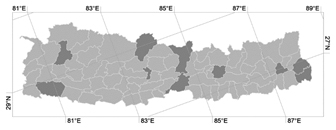
Distribution: Nepal, E. Himalaya and Assam-Burma.
Altitudinal range: 1200–1900 m.
Ecology: Usually in rocky moist surfaces.
Flowering: August–Sepemper.
Fruiting: September–October.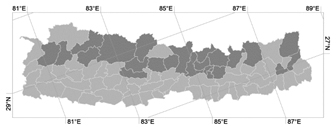
4. Cyanotis vaga (Lour.) Schult. & Schult.f., Syst. Veg., ed. 15 bis [Roemer & Schultes] 7(2) (1830).
Tradescantia vaga Lour., Fl. Cochinch. 1: 193 (1790); Cyanotis barbata D.Don; Tonningia barbata (D. Don) Kuntze; Tradescantia barbata (D. Don) Spreng.
Perennial herbs, 4–29 cm. Bulbs globose. Stems branched, decumbent or slightly ascending. Leaves spiral, cauline, linear, lanceolate, 3–6 X 0.4–1 cm, acute or acuminate apex, slightly pubescent on margins but not silky arachnoid. Inflorescence solitary or axillary cyme, cincinni solitary, bracts ovate to lanceolate, 5–10 mm. Pedicels absent. Flowers 2–many, actinomorphic. Sepals 3, oblong-lanceolate, 2–3 mm, connate at base. Petals 3, 3–4 mm, tubular, blue or pink. Stamens 6, 5–6 mm, fertile, equal, filaments, sub apical swelling, anther locules, blue. Ovary 3 loculed, ovules 2 per locule. Capsules 3-valved, obovoid. Seeds 2 per valve, 1.7–2.7 mm, reticulate, brown.
Distribution: Nepal, W. Himalaya, E. Himalaya, Tibetan Plateau, Assam-Burma, E. Asia, SE Asia, SW Asia, and Africa.
Altitudinal range: 800–2700 m.
Ecology: Moist places near road or in margins of forest.
Flowering: August–September.
Fruiting: October–November.