
1. Alisma , Sp. Pl. 1: 993 (1753).
Taxon Description
Perennial, aquatic herbs, usually tuberous. Roots fibrous. Leaves petiolate, aerial, mostly upright, mid vein parallel with lateral veins and converging towards apex. Scapes erect, inflorescence a panicle with whorled branches, bracts at base of the branches. Flowers all bisexual. Sepals 3, persistent. Petals 3, free, white, sometimes purplish-white, larger than sepals. Stamens 6–9, glabrous, anthers dorsifixed. Carpels free, numerous, in a single whorl, ovary unilocular. Fruit a head of erect, laterally compressed achenes.
Taxon Statistics
Worldwide eight species. One species in Nepal.
1. Alisma plantago-aquatica subsp. orientale (Sam.) Sam., Ark. Bot. 24A(7): 16 (1932).
जल पर्नी Jal parnee (Nepali).
Herbs to 80 cm. Leav es in basal rosette, petioles 2.5–18 cm, broadly lanceolate to elliptic, (4–)5.5–10 X 3–5.5 cm, base cordate, sometimes truncate, apex acute, rarely acuminate, veins 5–7, converging towards apex and connected by transverse veins. Inflorescence 30–65 cm, with distinct nodes, branches in whorls of 5–9. Pedicels (0.7–)1–3 cm. Sepals green, broadly ovate, ca. 0.2 X ca. 0.1 cm, apex acute, margin entire to slightly crenate. Petals white with a yellow claw, suborbicular, 3.5–6.5 X ca. 3.5 mm, margin denticulate, delicate. Stamens usually 6, arranged in a single whorl, anthers yellow, elliptic to oblong, 0.5–1.2 mm, filaments filiform, longer than anthers, glabrous. Carpels numerous, yellowish, 0.7–1.5 mm, arranged in a single whorl. Achenes elliptic or oblong, 2–3 X ca. 1.5 mm, apex obtuse. Seeds brown, up to 0.2 mm.
Distribution: Nepal, W Himalaya, E Himalaya, Assam-Burma, S Asia, E Asia, N Asia, C Asia, SW Asia; Europe and Africa.
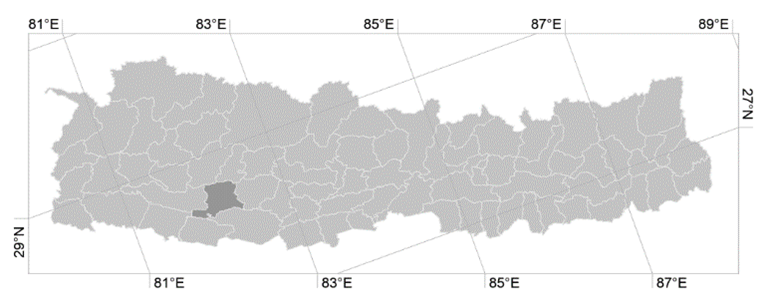
Altitudinal range: 1000–1100 m.
Ecology: Ditches, margins of lakes, ponds, marshes, channels. Sometimes beside slow-moving rivers, as well as cultivated land.
Flowering: April–May. Fruiting: May–October.
The whole plant is edible, with the roots, leaves and young shoots being cooked as vegetables. Root, leaves and fruits have medicinal values.
*Note: The description of the flowers adapted from the Flora of China and the Flora of Thailand.